 SeatecHIROSHIMA Ltd.
Uses
Every use we publish, on one page.
Uses of our surface technology and our ocean data. Narrow them down by direction or by who you are.
No use matches these choices.
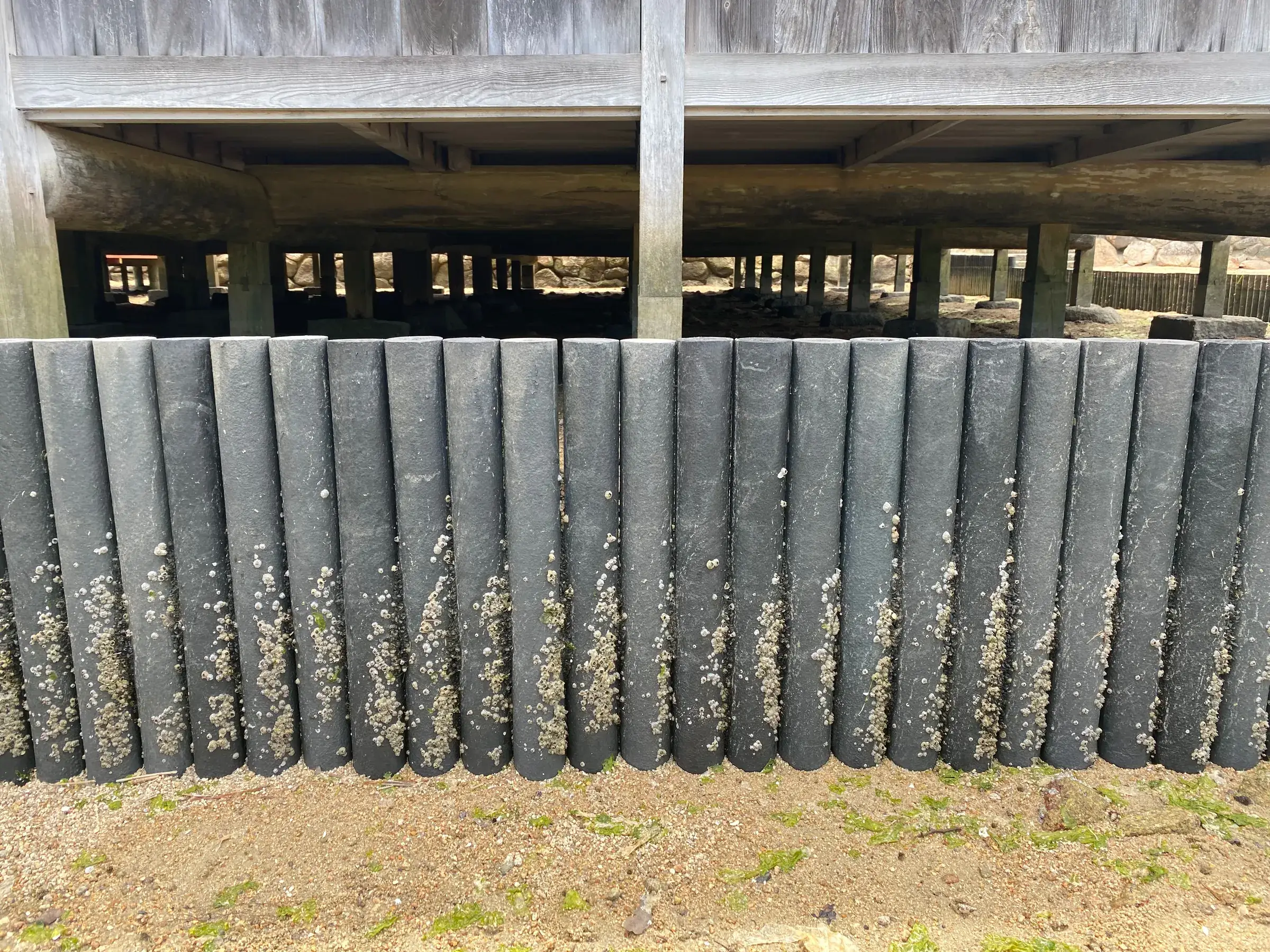
- Ship propellers (brass)
Bonding a fluorine-based antifouling agent to the surface of brass propellers so barnacles and algae find it harder to take hold. The evidence comes from a propeller test in the sea at Kure, part of Professor Kuroda’s research, continued to 12 months.
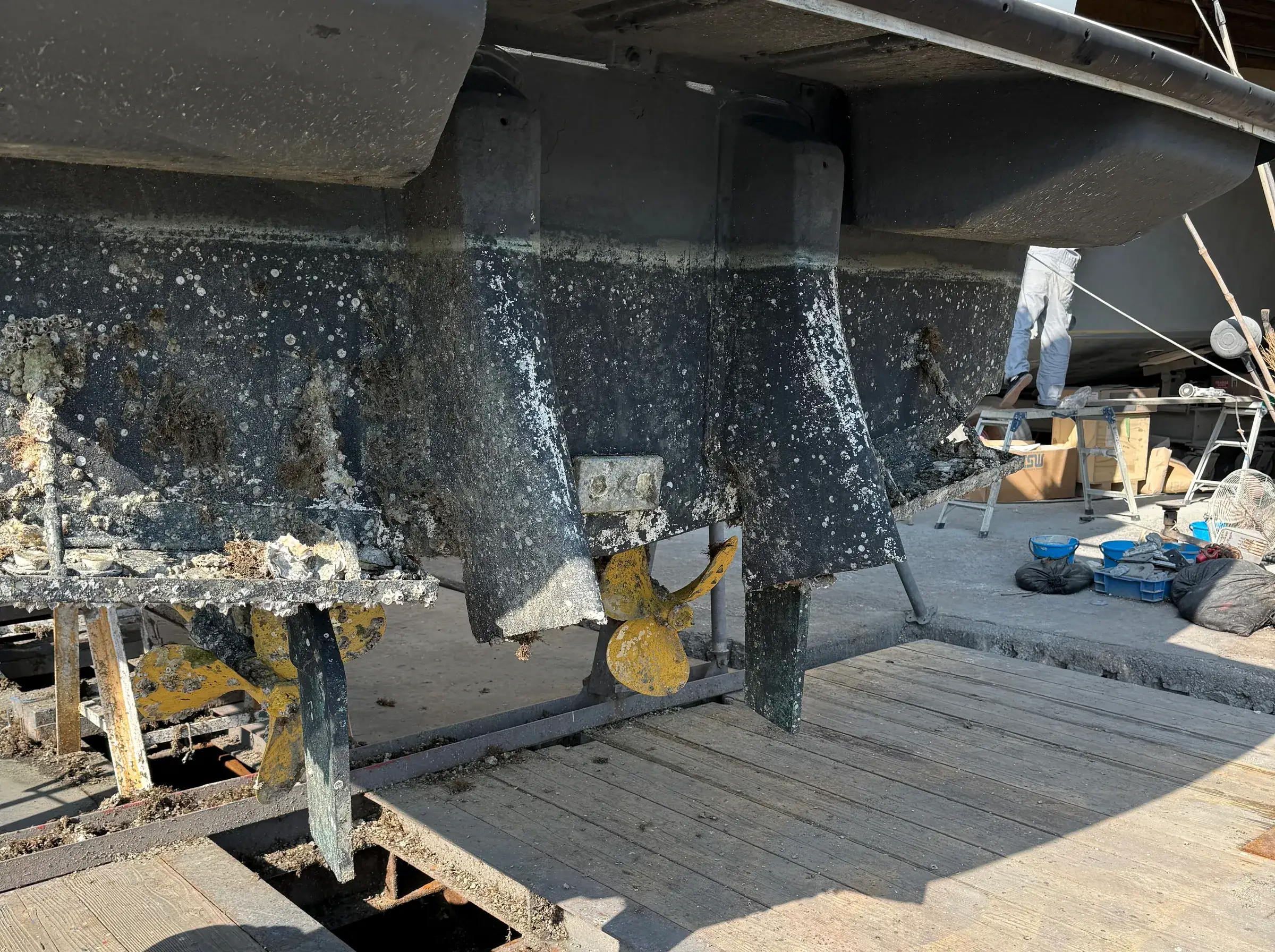
- Ship bottoms, hulls and rudders
An idea for using the treatment on a ship’s underwater parts, such as the bottom, the hull and the rudder.
- Ocean-going ships
An idea for using the treatment to cut the marine life that ocean-going ships carry from one sea to another.
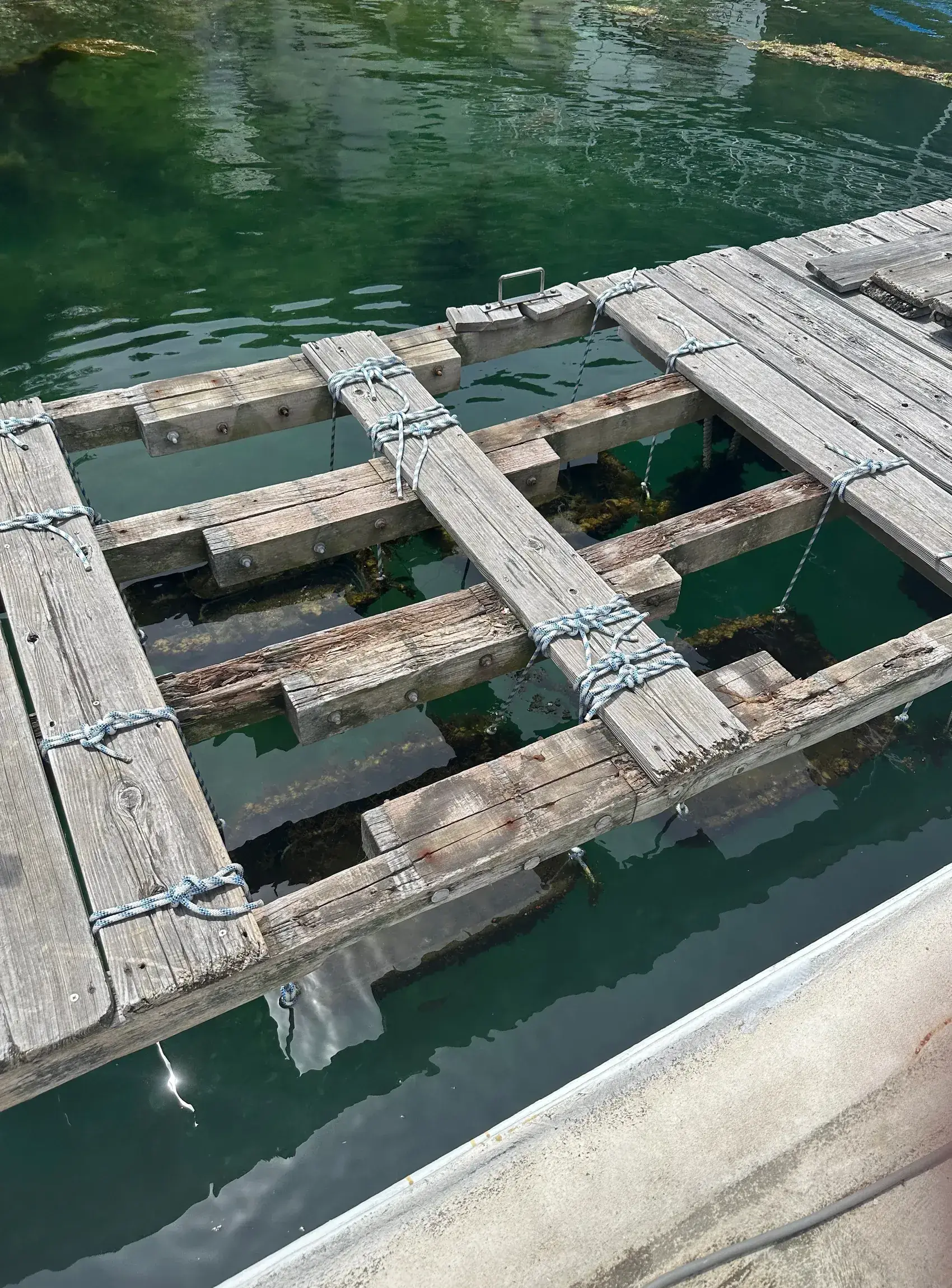
- Oyster rafts and baskets, and filters in land-based aquaculture
An idea for using the treatment on aquaculture gear such as oyster rafts and baskets, and on the filters of land-based aquaculture. Barnacles on oyster rafts are the problem our company started from. It is the gear that would be treated, not the oysters themselves.
- Floats and buoys
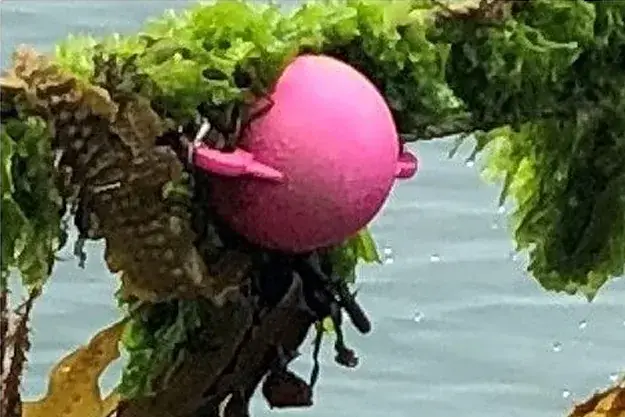
Treating the surface of the floats and buoys used in fishing and aquaculture so shellfish and seaweed take hold less readily. The evidence comes from a float tested in the sea in Professor Kuroda’s research.
- Rope
Treating the surface of rope used in fishing, aquaculture and elsewhere so shellfish and seaweed take hold less readily. We are continuing our own trials in the sea at Kure.
- Fishing and aquaculture nets
Treating the surface of fishing and aquaculture nets so shellfish and seaweed take hold less readily. The evidence comes from research by Professor Kuroda and Professor Terakado on rope used for nori nets.
- Water intakes and cooling lines
An idea for using the treatment on equipment that draws in seawater: ships’ intakes and pipework, and the intake equipment of power stations and factories.
- Underwater glass (windows, cameras and more)
Treating the surface of glass used in the sea, such as underwater windows and cameras, to keep fouling off it. The evidence comes from a glass test in the sea at Kure, part of Professor Kuroda’s research, continued to 12 months. It turns slightly cloudy, but looks clear when it is in the water.
- Marine equipment and infrastructure
An idea for using the treatment on marine equipment other than ships, such as offshore wind installations, subsea cables and piers.
- Working with paints
An idea for using the treatment that holds back fouling together with existing paints.
- Underwater drone (ROV)
Our work on the other side of fouling: removing what has already settled, alongside keeping it off. We are developing a prototype underwater drone (ROV) for cleaning fouling off ship hulls.
- Cleaning with collapsing bubbles (cavitation)
A cleaning device we are developing, which removes fouling from ship bottoms with the force of bubbles as they collapse.
- A barnacle remover on rails
An idea for a device that removes barnacles from boats’ hulls at marinas.
- Hull cleaning with a before-and-after record
An idea for giving boat owners both a cleaned hull and a record of how it looked before and after.
- Measuring the state of fouling
An idea for turning the state of fouling into data.
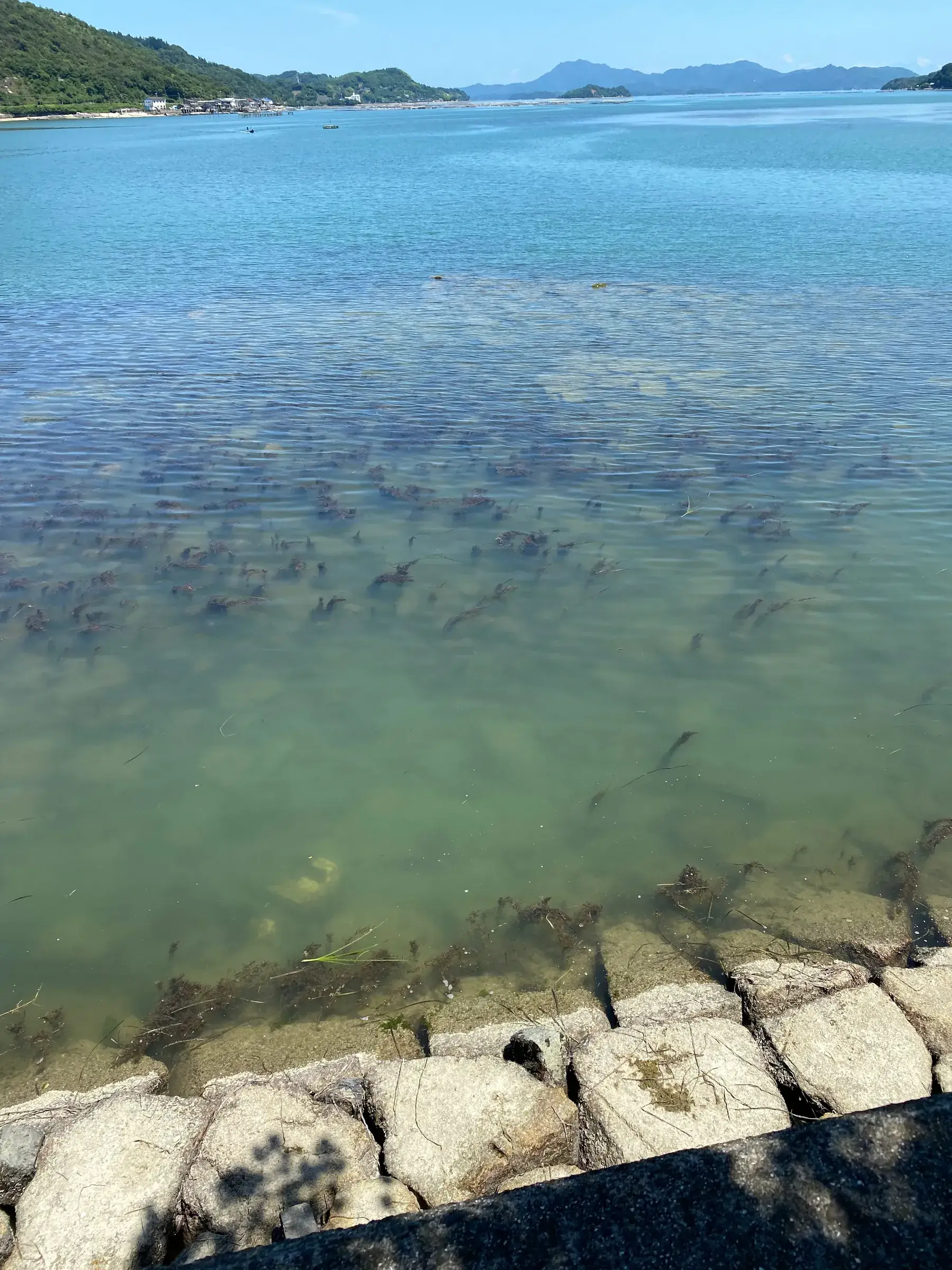
- Restoring eelgrass beds
Rope treated so that eelgrass can take root on it, with the aim of restoring eelgrass beds. The trial that began on Kurahashi Island, Kure, in December 2023 is part of Professor Kuroda’s KAKEN-funded research.
- Restoring seagrass and seaweed beds in Nanao Bay (Noto)
An idea for restoring seagrass and seaweed beds in Nanao Bay, Noto, with local fishers.
- Rice husks for better soil
We treat the surface of rice husks and settle useful microbes on them, turning the husks into a soil improver for building up farm soil. We confirmed faster germination and growth of radishes with it in Hiroshima Prefecture.
- Bringing abandoned farmland back into use
An idea for using treated rice husks to bring fields that are no longer farmed back into cultivation.
- Restoring salt-damaged farmland (Noto and elsewhere)
An idea for using treated rice husks to restore the soil of fields damaged by salt.
- Bringing seaweed back to barren coasts
An idea for giving seaweed somewhere to take hold where it has disappeared from the sea (isoyake).
- A base for seaweed to settle and grow (treated rope and cord)
Making the surface of rope or cord hydrophilic and fixing proteins or ions to it, so that spores and larvae drifting in the sea have a place to settle and grow naturally. The results come from Professor Kuroda’s KAKEN-funded research.
- Nori and seaweed farming nets
Fixing protein to the rope of nori and other seaweed farming nets, so that nori spores drifting in the sea settle and grow on it naturally. The evidence comes from research by Professor Kuroda and Professor Terakado on rope used for nori nets.
- Seaweed beds on structures in the sea
An idea for creating seaweed beds on structures in the sea, such as offshore wind foundations, breakwaters and seawalls.
- Fishing gear that releases nutrients
An idea for answering the decline of nutrients in the Seto Inland Sea with fishing gear that releases them.
- Greening (slopes, railway forests, hillsides and more)
An idea for using the surface treatment in greening work, on slopes, railway forests and elsewhere.
- Finding oyster rafts in satellite imagery
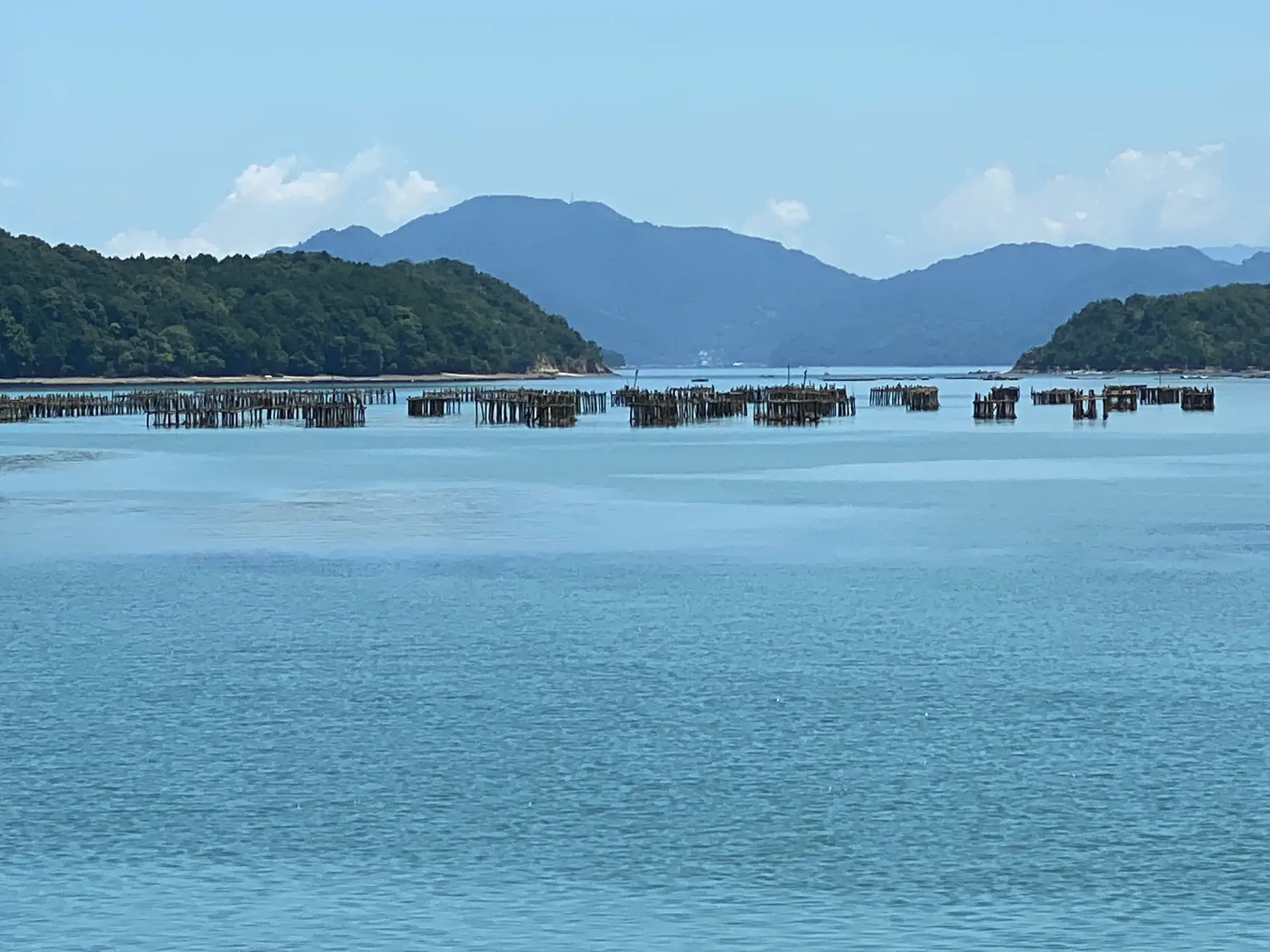
We analyse satellite data to find the oyster rafts floating in the sea. Working with a laboratory at Hiroshima University, our latest analysis found about 90% of the oyster rafts in Hiroshima Bay, checked against the rafts actually afloat. Not every raft is found, so it is meant to be used alongside a lookout.
- Ground-truth data for the satellite analysis (checking against measurements, correcting offsets)
An idea for checking the satellite analysis against where the rafts actually are.
- Raft positions on a boat’s screen (an aid to navigation)
A prototype that shows the rafts found by satellite on a device aboard the boat.
- A phone alert when you near an oyster raft
A system we are developing that warns you on a smartphone running the app as your boat nears a raft fitted with IKAK.
- Helping small boats avoid each other (the phone as a beacon)
An idea for letting small boats without AIS notice each other through their smartphones.
- Obstacle data for autonomous ships
An idea for putting the data we gather on rafts and other obstacles to use for autonomous ships.
- IKAK (a beacon for oyster rafts)
A small beacon for oyster rafts that we are developing. It sends out only its own ID number, which the smartphones of passing boats pick up.
- Extending IKAK’s range (offshore buoys, other aquaculture, port facilities)
An idea for extending IKAK’s range so it can be used beyond oyster rafts.
- Managing oyster rafts, and keeping track of rafts and debris that drift away
An idea for using IKAK’s ID numbers to tell rafts apart, to help manage them and keep track of any that drift away.
- How it would be offered (app, data and beacons)
Our idea of how the app, the data and the beacons would be offered.
- Other aquaculture waters (pearl and fish farming in Ehime and elsewhere)
An idea for taking the raft mapping we began with oyster rafts to other aquaculture waters.
- Overseas ports and national ocean data platforms
An idea for providing raft position data to overseas ports and national ocean data platforms.
- Watching over the sea (suspicious vessels and drifting objects)
An idea for using data on rafts and fishing gear whose positions are known to help keep watch over the sea.
- Monitoring seagrass beds by satellite
An idea for keeping an eye on the extent of seagrass beds in satellite images.
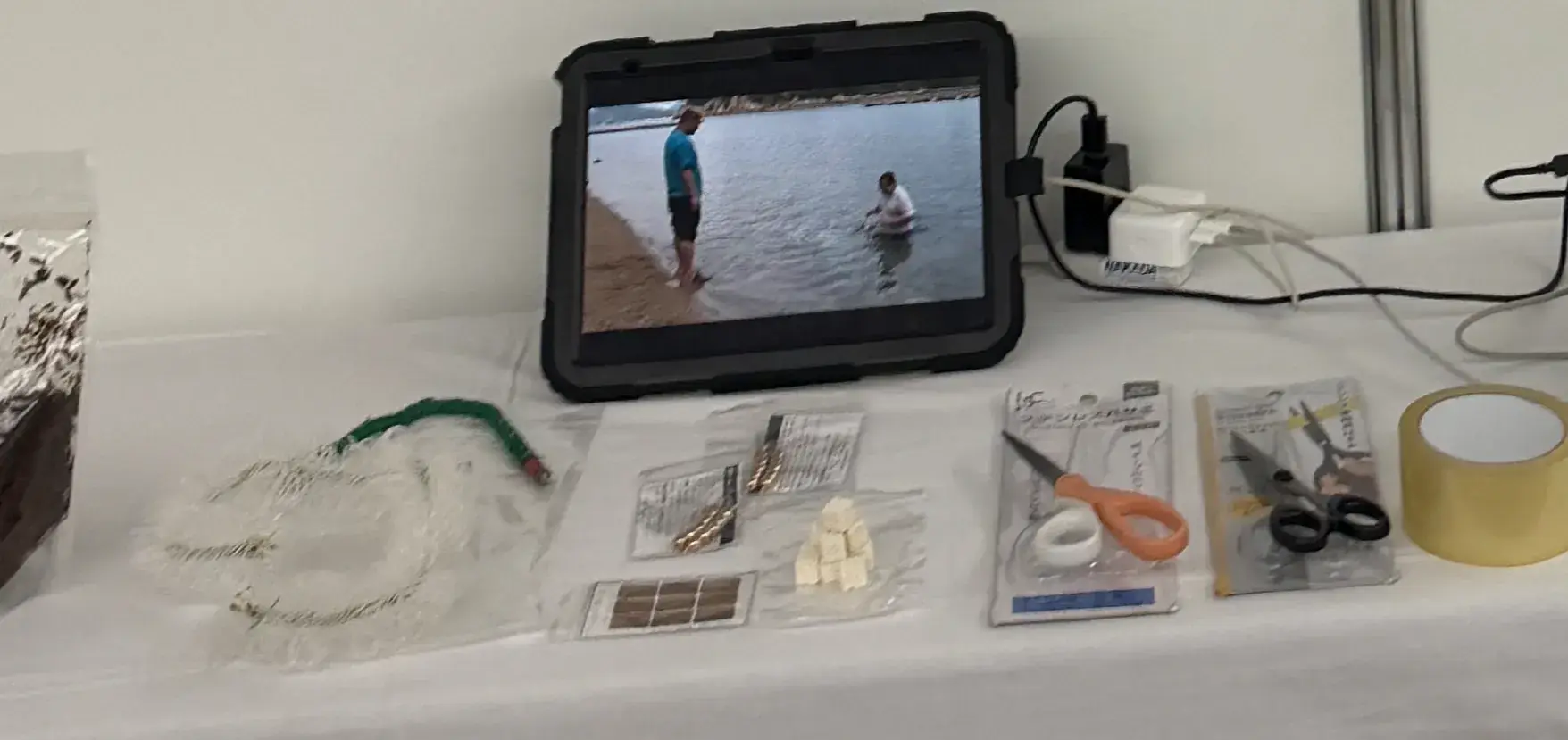
- Scissors that tape sticks to less (exhibit 01)
An exhibit made by Professor Kuroda, our technical supervisor, himself, bringing the keep-it-off treatment tried at sea to an everyday product.
- Gold on a surface things don’t stick to (exhibit 02)
A sample made by Professor Kuroda, our technical supervisor, himself, using kraft tape and gold to show a chosen material being fixed to a surface things don’t normally stick to.
- Gold beads for shoes (prototype, exhibit 03)
A prototype made by Professor Kuroda, our technical supervisor, himself: small beads coated with gold, to go inside shoes.
- A ceramic that gives microbes a home (exhibit 04)
An exhibit made by Professor Kuroda, our technical supervisor, himself: a ceramic whose surface has been treated so that microbes settle on it.
- Protecting metal from rust and corrosion
An idea for also using the treatment that keeps metal surfaces clean against rust and corrosion. Professor Kuroda’s research, which the technology grew out of, has also extended to protecting metals from corrosion.
- Keeping glass clean (vehicle windows, sensors and more)
An idea for taking the treatment tried on glass under water to equipment on land, such as vehicle windows and sensors.
- Bacterial film (slime) in water systems
An idea for making it harder for bacterial film (slime) to form in the pipes and tanks of food factories, hot spring facilities and the like.
- Medical devices and more: surfaces bacteria find harder to settle on
An idea for giving the surfaces of medical devices, and of the equipment used to make medicines, a property that makes it harder for bacteria to settle on them.
- Equipment that faces heat or needs precision (geothermal plants, semiconductor manufacturing and more)
An idea for preventing fouling and corrosion in geothermal plants, semiconductor manufacturing equipment and the like.
- Fixing catalysts and other materials to a surface
An idea for holding materials that do a job, such as catalysts, on the fine footholds of a treated surface.
- Getting urushi lacquer to hold on plastic
An idea for getting urushi lacquer to hold on plastic surfaces that normally shed coatings.
- Reusing untapped resources (biomass other than rice husks and more)
An idea for extending the rice husk treatment to other untapped biomass and to urban waste.
- Clothing prints and hydroponic growing sheets
An idea for everyday materials, such as prints on clothing and the sheets used in hydroponic growing.
- How we take enquiries
We take enquiries on the contact page about any use — keeping things off, taking them off, helping them take hold, ocean data or beyond the sea — about processing, licensing, joint research and other ways of working, and from investors and the press. You do not need to have settled on a material or a place yet. If you have photos, please send them by email once we have replied.
- Talking through a material or a problem (commissioned research and technical consulting)
From trying a surface treatment on your material (metal, ceramic or polymer) to designing how it would be used, we work it out with you. We also take enquiries about helping things take hold, such as getting a particular microbe to settle, and help sort out problems at sea that have not yet been solved. The first consultation is free.
- Processing and part testing
An idea in which our engineers bring the equipment to you and treat the parts or materials you use. We also welcome enquiries from anyone who would like to start by trying it on a part.
- Technology licensing
An idea for licensing the right to treat with our recipe, field by field and region by region, to the manufacturers and contractors who handle mass production and installation.
- Licensing the rice husk treatment equipment
An idea in which equipment makers build and run the machines that treat rice husks.
- Treated materials for restoring seagrass beds
An idea for selling treated materials, such as rope, for restoring seagrass beds.
- Blue carbon credits
An idea for turning the carbon taken up by restored seagrass beds into credits.
- Joint research and field trials
We design and run sea trials together with universities, research institutes, companies and local governments.
- Taking part in Hiroshima University’s COI-NEXT centre
Since October 2025, we have taken part in Hiroshima University’s JST COI-NEXT centre for a marine cultural city built on ocean remote-sensing technology.
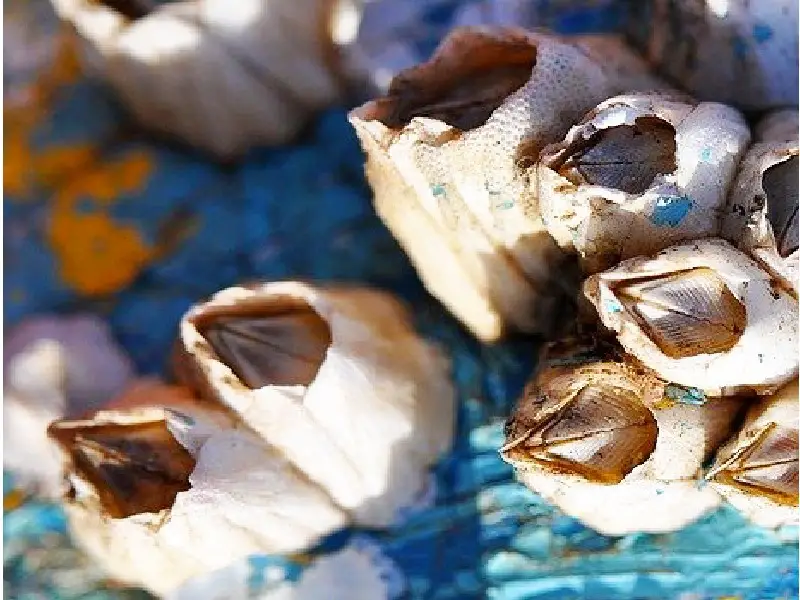
- Sea trials of rope and floats (KAKEN grant 22K04725)
Sea trials in research led by Professor Kuroda, our technical supervisor, which put treated rope and floats in the sea to see how marine life settled on them.
- Antifouling with silver, copper or zinc ions, or precious metals (tried in research, and not used)
Methods tried in the research of Professor Kuroda, our technical supervisor (KAKEN grant 22K04725), and not taken up.
- It began with research on dental implant surfaces
The technology grew out of research on surface treatments for dental implants that Kensuke Kuroda (Representative, Nagoya Surface Technology; Specially Appointed Professor, Institute of Innovation for Future Society, Nagoya University) has pursued since 2003. That research was extended to protecting metals from corrosion, and from there to the sea and to farming. Kuroda supervises the technology in a personal capacity.
- How the treatment works: conditioning the surface and fixing the right agent to it
We condition the material’s surface with plasma or electrochemical treatment and build a very fine scaffold on it. Where life should stay off, we fix a fluorine-based agent that is also used in dental care. Where it should take hold, we fix things that help it root and settle, such as nutrients or useful microbes. We use no copper, silver or other biocides.
- KAKEN grant 22K04725: research that tried both directions at sea
KAKEN grant 22K04725, led by Professor Kuroda, our technical supervisor, tested both kinds of treatment in the sea: one that makes it harder for marine life to settle, and one that makes it easier. The research ran from fiscal 2022 to 2024, with Professor Osamu Terakado as co-investigator.
- The idea of control: designing what sticks and what doesn’t
At the heart of the technology is control over what settles: keeping things off where they are not wanted, and actively helping them take hold where they are welcome. Our ocean data business (OceanMap) takes the same idea into ocean information, and uses no surface treatment.
Keeping things off, helping them take hold, removing them, or ocean data: whatever the use or business, talk to us.
Talk to us